
Wayne State University
Center for Urban Studies
1,000 Year Floods
Occurring With
Increasing Frequency
In 2021 A 1,000 year storm hit Jefferson-Chalmers with 6-8 inches of rain. The ensuing floods and power outages overwhelmed sewage pumping stations intended to protect Southern Detroit. Families had sewer water geysers in their basements. Outside, some had up to six feet of water. The vast majority of homes experienced major flooding.
It was a catastrophe for the largely low to moderate income residents, most from minority backgrounds.
More than a month later, most still had water in their basement. Residents lost furnaces, water heaters, washers and driers, not to mention personal belongings.
It cost thousands to replace these goods and fix their homes.
Our Research
With One Health funding, we returned to homes, measuring:
mold
fungi
myotoxins
Flooding left residents not just with the bill to replace their appliances and personal affects, but risks to their personal health.
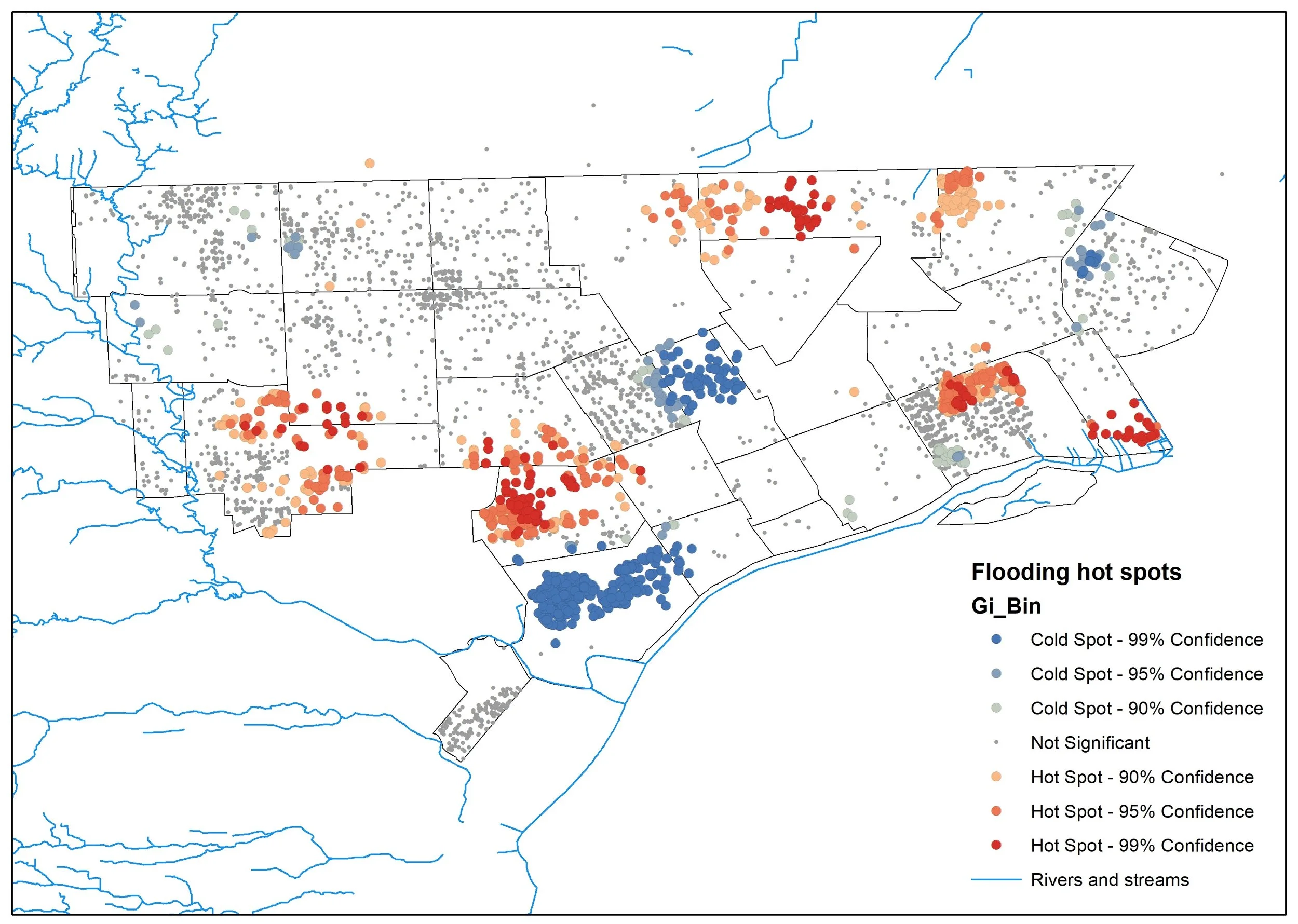
Few residents had green infrastructure, none had backflow preventers, and residents were not prepared for another equivalent event.
1,000 year storms are becoming more frequent occurrences, and every person in Michigan is now likely to see multiple 1-in-100 year floods in their lifetime.
As of 2021, 43% of 4,667 Detroit households surveyed reported household flooding between 2012-2020.
Flooding is costly, affecting physical and mental health: injuries or death, respiratory illnesses due to mold or microbes, gastrointestinal issues, skin rashes, eye irritation, and psychological distress. Flooding is expensive, from missed school and work, to displacement and recovery costs.
Preliminary results from a detailed survey of Detroit homes indicate that 61% of Detroiters live in homes that have major health and safety hazards such as excess cold, lead, moisture and mold and falls on stairs. (HUD) The scientific literature has statistically linked poor housing conditions to a number of negative health outcomes, including but not limited to asthma, lead poisoning, respiratory illness, mental health conditions, burns, falls and other unintentional injuries.
The frequency, duration, and severity of rain events is with rising water levels over the next 25 years is expected to increase. The heaviest 1% of rain events has increased by 37% since the mid-20th Century according to the National Climate Assessment.
According to our Home Safety Assessments, renters are 1.7x more likely to report household flooding than homeowners, homes built before 1939 were more likely to experience household flooding, flooding conditions were associated with adult and child asthma, and primarily, historically black communities were found to be at high risk for household flooding, even when controlled for household and neighborhood factors.
Results
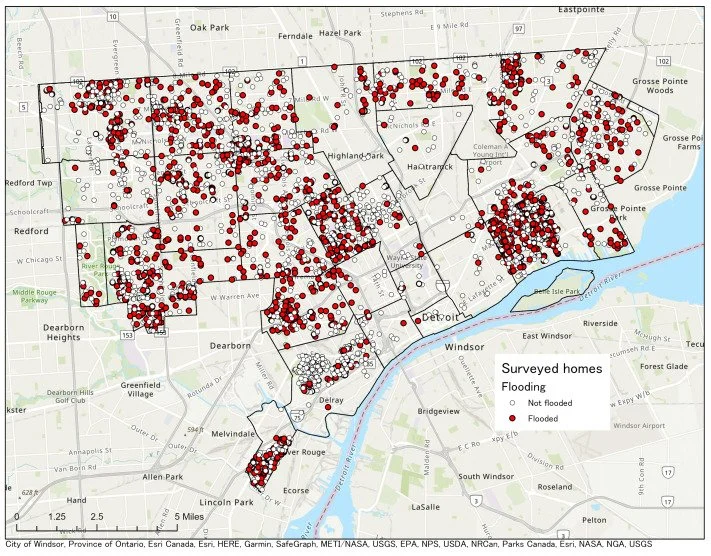
Our study results in 2020 suggest that home flooding is a far more serious issue than previously thought.
Flooding disproportionately impacts people who may lack financial means to effectively recover from flooding events and pluvial disasters, and who, due their status as renters, may lack the ability to implement measures to prevent or to mitigate the impacts of floods, such as basement weatherization or roof repairs.
This would suggest that a focus on home flooding risk and efforts to improve housing quality should be a priority not only for advocates of urban housing, but also for public health organizations, focusing on programs that educate, work with, and provide resources to renters and incentives to landlords to improve housing quality/maintenance.
interventions that work
We formed AmeriCorps READY to help Detroit residents and found partners who wanted to make a real impact in our community.
Our continued research on Detroit homes and residents’ health informs our decision-making process.
In our research program, we not only study affected residents, but provide them with real interventions to measurably improve their lives.
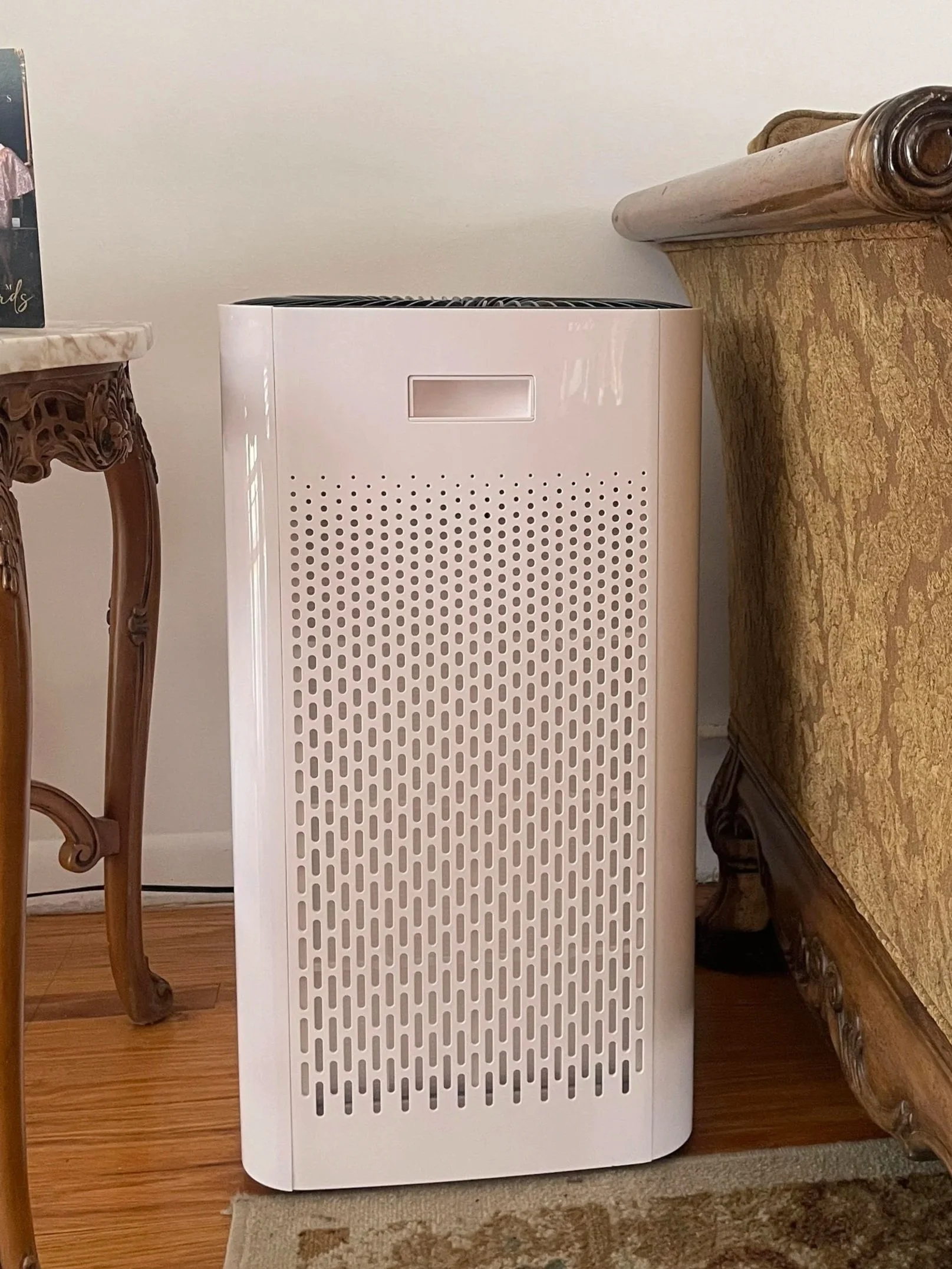
Air Purifiers
Detroit residents have some of the highest rates of air incursion into their homes and high rates of asthma. With residents living in close proximity to highways, busy roads, and industrial factories, and most using gas stoves and furnaces, air purifiers are critical to their health.
Dehumidifiers
Mold grows in moist conditions. While not all moisture can be taken out of the home, using dehumidifiers in basements is known to help prevent the growth of mold. This reduces the probability of myotoxins in the home.
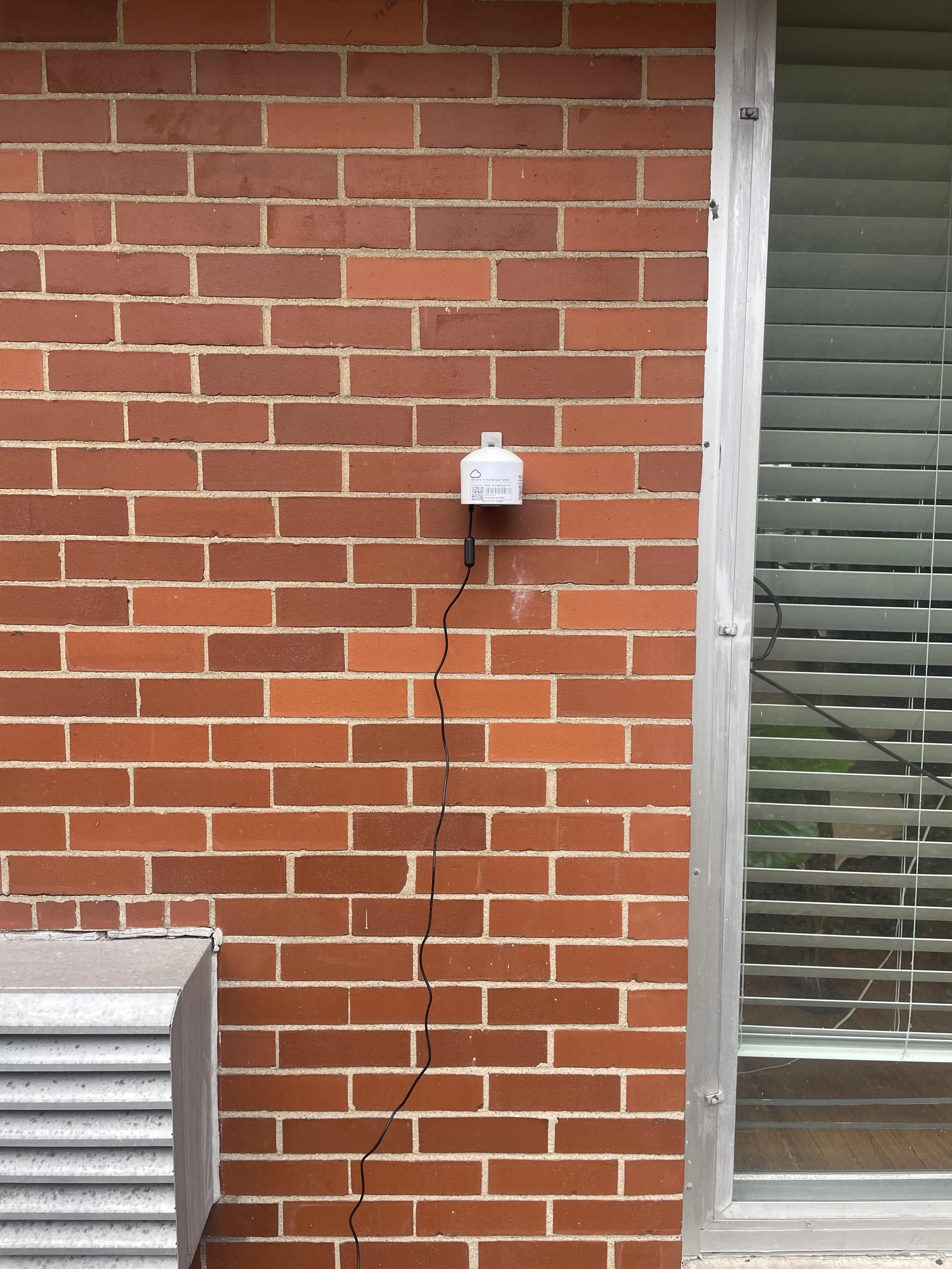
Air Quality Monitoring
We monitor both indoor and outdoor air quality to assess how much of nearby emissions and external pollutants are entering homes. Our interventions are aimed at reducing residents' exposure to harmful indoor air pollutants.
Downspout Extensions
Getting water at least 10’ away from the house helps water drain down into soil and away from basement incursion through basement walls.
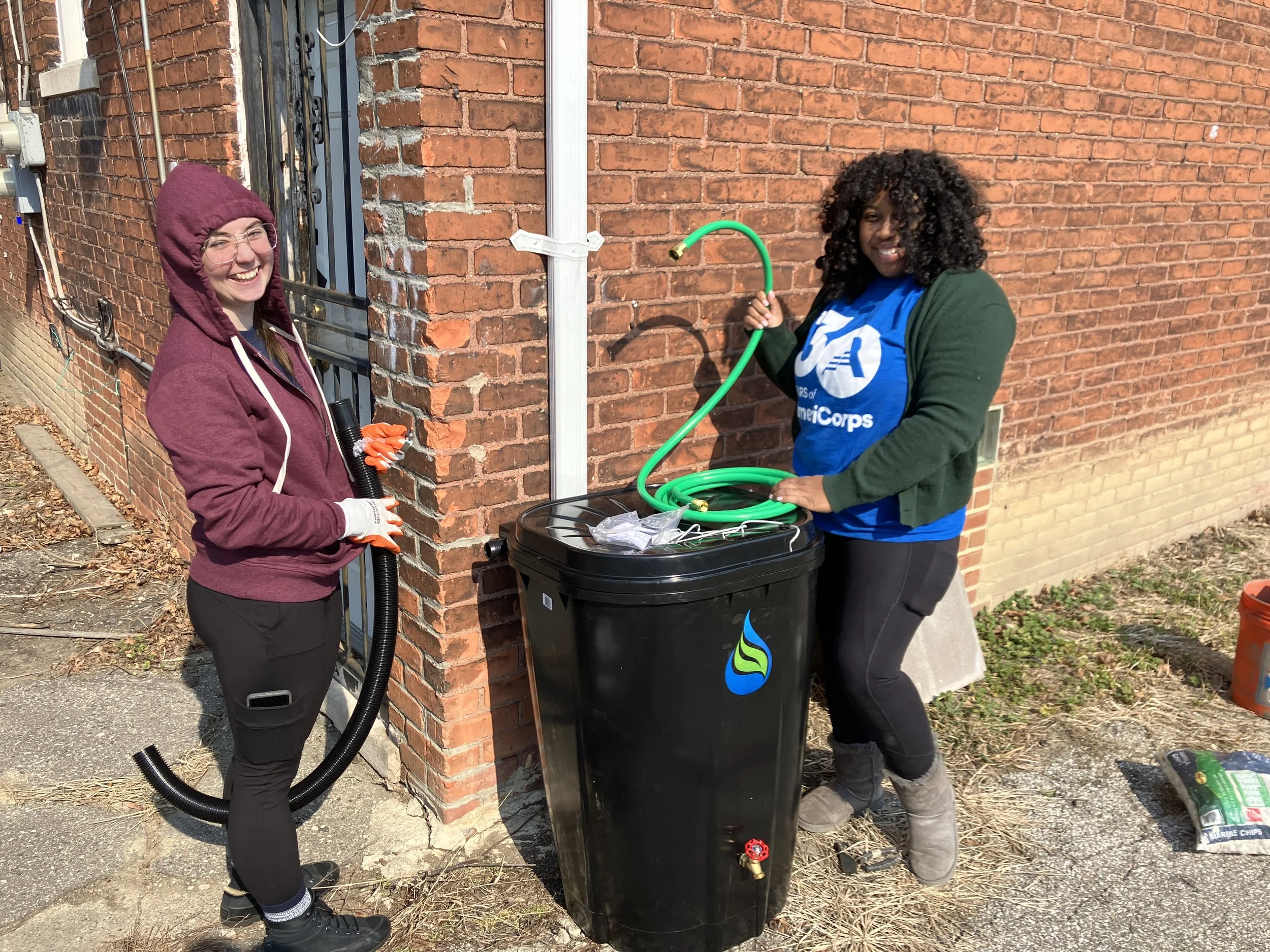
Rain Barrels
The combined sewer-stormwater system in Detroit has a limited capacity for managing large storm burdens. By rerouting rainwater to rain barrels or to rain gardens that help filter the water and return it cleaned to the earth, we can reduce the strain on the system and prevent backflow into people’s homes.
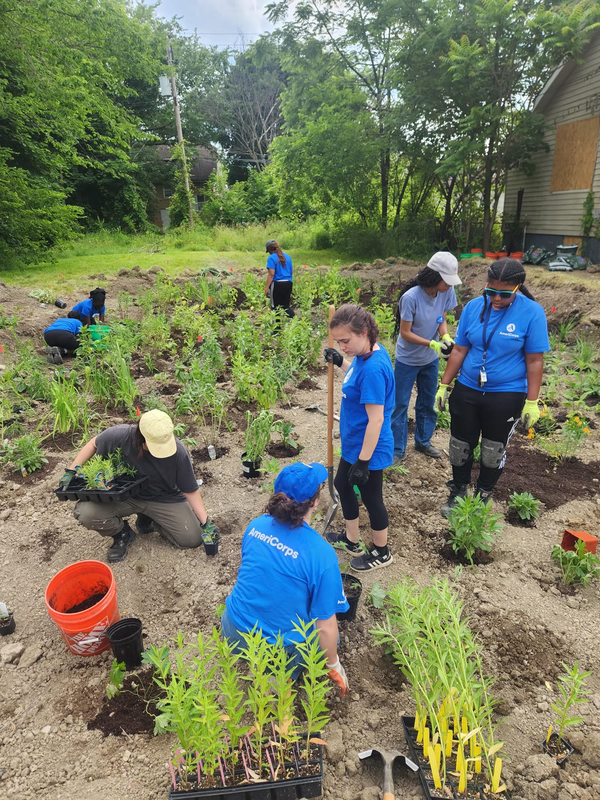
Rain Gardens
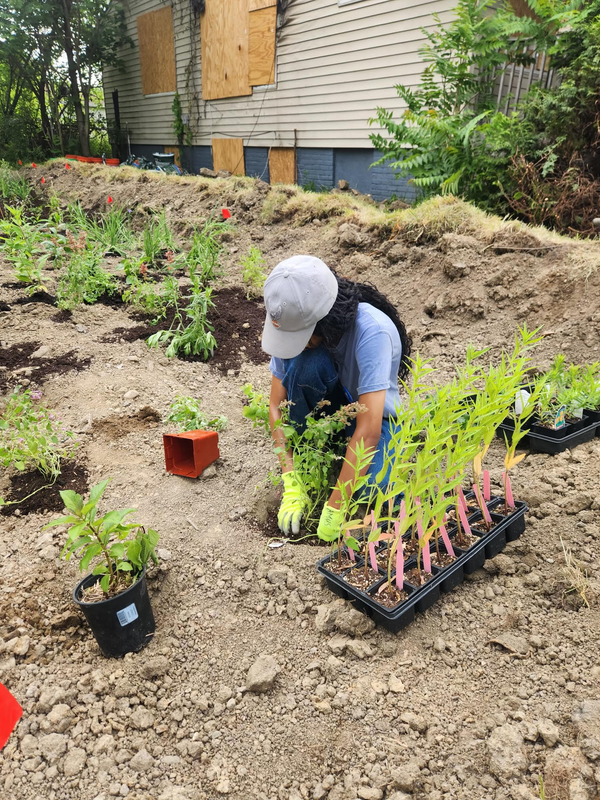
Rain Gardens are depression style gardens that hold water for 24-48 hours, effectively rerouting away from homes and keeping it out of the stormwater system. Rain gardens use native plants with deep roots to bring the water deep into the soil, and provide habitat for native pollinators.
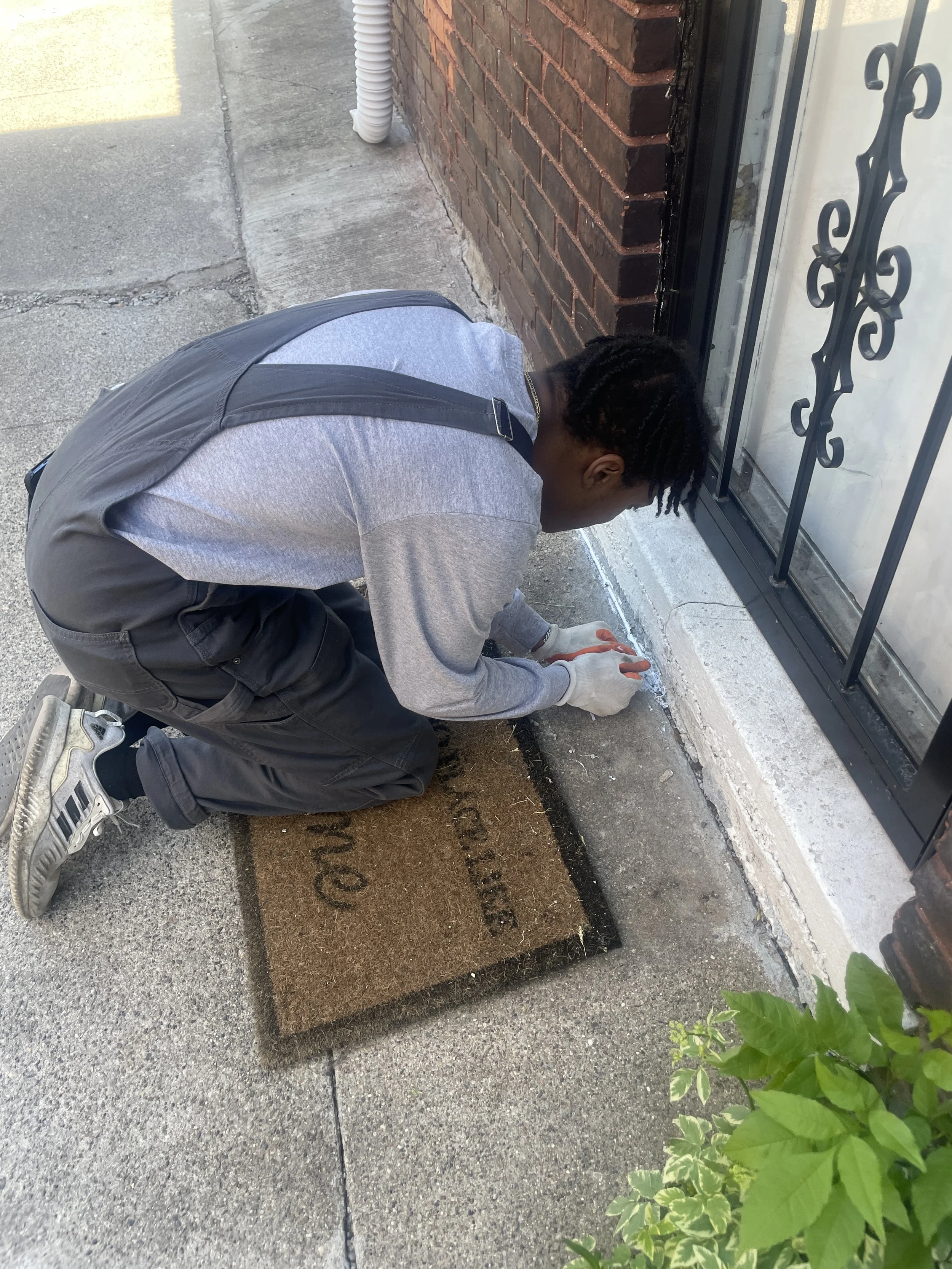
Caulking, Grading
Re-caulking and grading help prevent water from seeping into basements. Proper grading can redirect water away from basements, and critically, basement windows.
Our Partners







Get In Touch
If you're interested in working with us, or supporting our work, please fill out this contact form or reach us at:
Sources
This data is collected using the Healthy Homes Rating System (HHRS) as developed by HUD. For more information about this tool, visit http://portal.hud.gov/hudportal/HUD?src=/program_offices/healthy_homes/hhrs.
Krieger J and Higgins DL. Housing and Health: Time Again for Public Health Action. American Journal of Public Health. 2002; 92: 758-768.
Household Flood Report https://huw.wayne.edu/learning-center/detroit_flood_report_2021.pdf